

In London, at the heart of the Westminster city’s government district, 10 Downing Street is one of Britain’s most famous addresses.
This unassuming terraced house serves as the official residence and office of the British Prime Minister, playing a crucial role in the nation’s governance. Built-in the late 17th century, the property has housed Prime Ministers since 1735, bearing witness to countless historical decisions and events that have shaped the country.
The building’s exterior is characterised by its famous black door, adorned with a white “10”. However, tourists might be surprised to learn that the door is actually dark green and repainted regularly to maintain its iconic appearance.
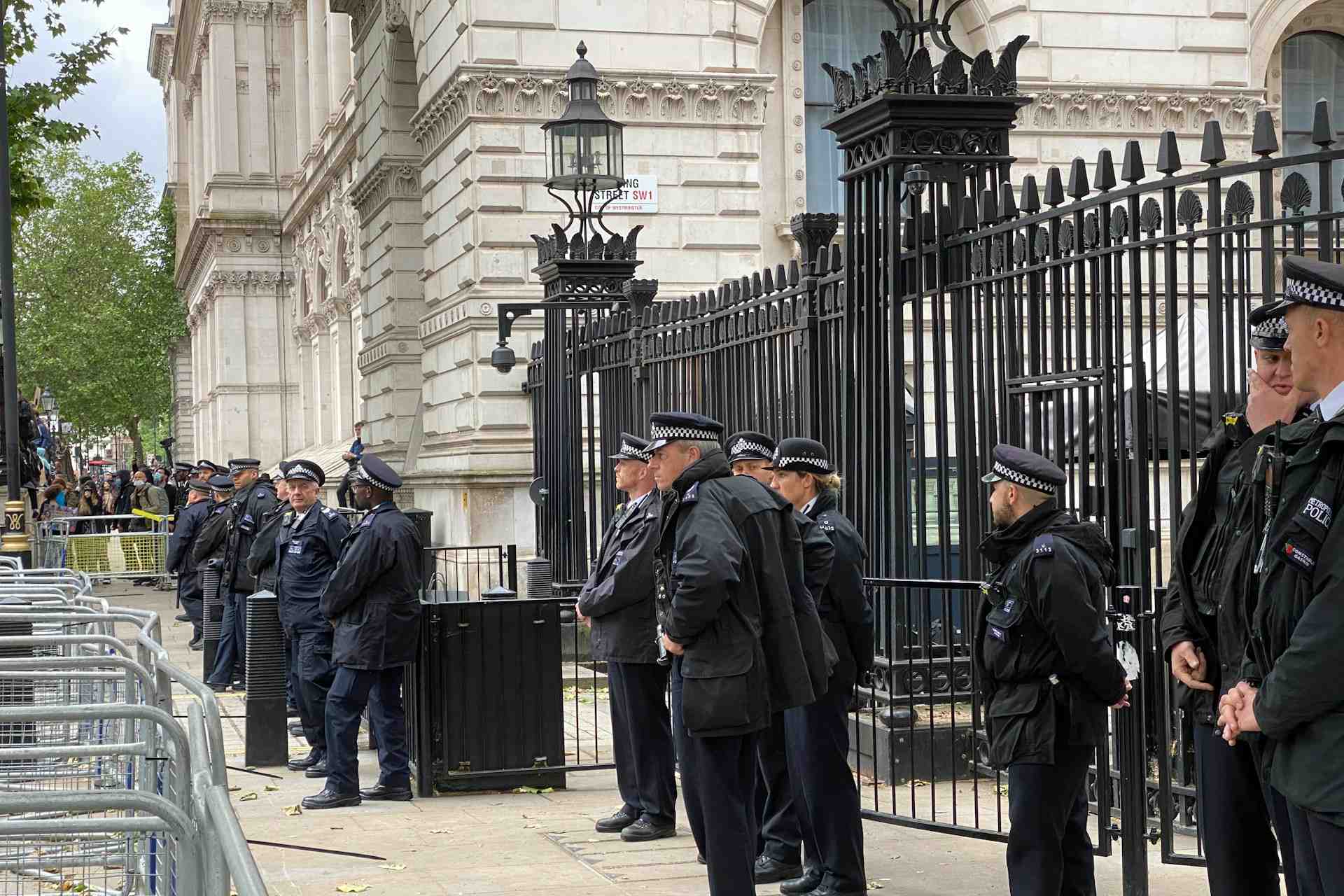
Given its central role in British politics, 10 Downing Street has long been tightly secured. The best view for visitors is from the gates at the end of Downing Street, which offer the clearest glimpse of this historic facade.
While the interior of 10 Downing Street is not open to the public, it contains a mix of working government spaces and private rooms. These include state rooms used for official receptions, offices for advisers and staff, and living quarters for the Prime Minister and their family. At the centre is the Cabinet Room, where the Prime Minister meets with senior ministers each week to make key government decisions.
Although the exterior is modest, the building has long stood as a symbol of British political power. It has been home to many of the UK’s most prominent Prime Ministers, including Winston Churchill and Margaret Thatcher, and remains one of the most recognisable addresses in British public life. Even from the outside, it offers a direct link to the workings of government at the highest level.

Why Downing Street is gated
Downing Street was gated in response to escalating security threats linked to the IRA during the late 20th century. At the time, the street was still open to the public, making it highly exposed despite its role as the centre of British government.
The first move came in 1989, when wrought-iron gates were installed during Margaret Thatcher’s premiership following a series of IRA threats, particularly concerns around car bomb attacks in central London.
Even after this, the area remained vulnerable. In 1991, the IRA launched a mortar attack from a parked van on Whitehall, with shells landing in the vicinity of government buildings, further highlighting the risk posed to the Downing Street complex.
Security was tightened again in 2004, when heavier steel and concrete barriers were added behind the gates in response to evolving global terrorism threats and the risk of vehicle-borne attacks. Together, these measures created a controlled and protected perimeter around one of the most sensitive locations in the UK.
Visiting Downing Street
Downing Street is located off Whitehall, one of London’s most important thoroughfares, which runs between Trafalgar Square and the Houses of Parliament. The area forms the centre of British government and is home to several major institutions, including the Treasury, the Cabinet Office, and the Ministry of Defence.
The street is easily reached by public transport, with Westminster Underground station the closest stop and just a short walk away. Trafalgar Square is also nearby, making Downing Street easy to visit as part of a wider walk through Westminster.
A number of bus services operate throughout the Whitehall and Westminster area, providing convenient access from across London. For the most up-to-date routes and journey information, it’s best to check the Transport for London website or journey planner before travelling.
The Local Area
Whitehall sits at the centre of UK government and is home to many of the country’s key political institutions. The street is lined with major government buildings, including HM Treasury, the Ministry of Defence, and the Cabinet Office, all operating within a short stretch of central London.
The wider area around Whitehall connects directly to some of the most important parts of Westminster, linking the Houses of Parliament at one end with Trafalgar Square at the other. This creates a dense cluster of political, administrative, and ceremonial landmarks that define how government functions in the UK.
Just beyond Whitehall, visitors also find a mix of historic streets, royal parks, and well-known attractions, all within walking distance. Despite its heavy administrative role, the area remains closely connected to some of London’s most visited cultural and historic sites.
Nearby Attractions
The following landmarks and attractions are within walking distance of Downing Street.
- Banqueting House
- Horse Guards
- St James’s Park
- Big Ben
- The London Eye


